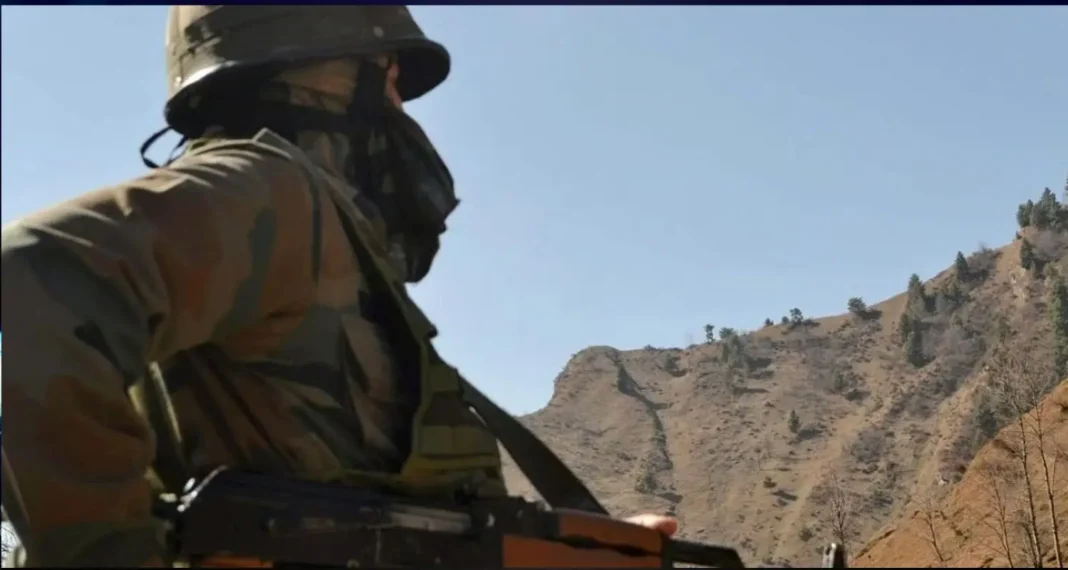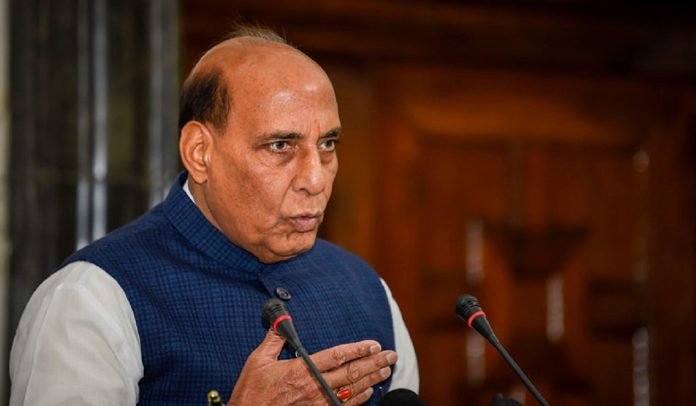
Defence Minister Rajnath Singh stated on Monday that India must always remain prepared for a “war-like situation” after witnessing unexpected challenges along its borders, particularly highlighted by the recent four-day military conflict with Pakistan in May. Singh spoke at an event in New Delhi, emphasizing the need for a strong and proactive national defense strategy.
During the address, Singh commented on India’s “firm response” during Operation Sindoor, indicating that the military action serves as an important case study for future security planning. “Our forces are fully prepared to defend the country’s borders, but introspection is key,” he stated. He urged that Operation Sindoor should guide future strategies and highlighted that threats can emerge at any time, stressing that vigilance is essential on all fronts.
Singh outlined the significance of self-reliance in defense, showcasing India’s indigenously developed weapons systems, including the Akash missile, BrahMos missile system, and the Akashteer air defense control system. These systems proved pivotal during the operation, elevating India’s stature on the global defense stage. “We need to be prepared for war-like scenarios, and our preparedness must be rooted in our own capabilities,” he asserted.
The Defence Minister further highlighted the government’s efforts to create a level-playing field for defence manufacturing. “We aim to ensure that defence equipment is not just assembled in India but truly manufactured here, embodying the spirit of ‘Made in India, Made for the World’,” he elaborated. This commitment not only strengthens national security but also bolsters economic growth by promoting domestic manufacturing.
Singh also shared impressive statistics regarding India’s defence production industry, stating that it has skyrocketed from ₹46,000 crore in 2014 to ₹1.51 lakh crore today. Contributions from the private sector have surged, amounting to ₹33,000 crore. The increase in defence exports stands testament to this growth, rising to nearly ₹24,000 crore and anticipated to hit ₹30,000 crore by March 2026. “Our growth trajectory reaffirms our commitment to enhancing India’s military capabilities,” Singh remarked.
Singh’s assertions resonate with the current geopolitical climate, where readiness and self-sufficiency remain critical priorities. The focus on indigenous production not only assures strategic autonomy but also reflects a broader ambition to position India as a key player in the global defence market. As the nation grapples with various border tensions, the emphasis on a self-reliant defense sector seems both prudent and timely.
In context of the recent military clash, Singh’s messages underline that India’s defence policy must evolve continuously, adapting to the dynamic security landscape. His push for indigenization stands as a call to action for stakeholders in the defense community to take proactive measures toward sustainability and self-sufficiency.