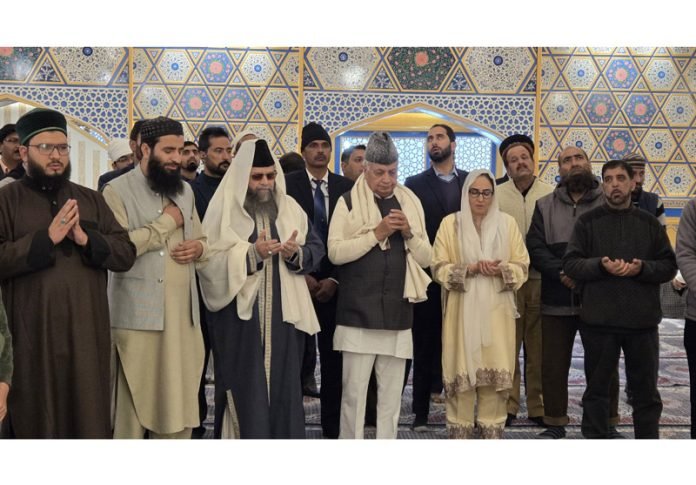
Bihar Governor Arif Mohammad Khan on Thursday highlighted Kashmir’s significance as “the crown of India,” asserting the region must achieve complete normalcy before managing its affairs effectively. His remarks came during a press conference following his prayers at the revered Hazratbal Dargah in Srinagar.
Khan expressed a deep emotional connection to Kashmir that spans decades. “I am saying this to the whole of India: Kashmir is the crown of our head,” he said, proudly recalling numerous visits to the Valley throughout his public life.
Reflecting on his tenure in the Union Home Ministry during the 1980s, he described his interactions with Kashmiri students from cities like Aligarh and Amritsar. “I have a long-standing bond with the people of Kashmir. Your hospitality is unmatched,” he noted, showcasing his respect for the rich culture and warmth of the Kashmiri people.
As the conversation shifted to the broader political landscape, Khan remarked on the evolution of India’s democracy. He asserted that it has moved beyond dynastic politics. “In our democracy, sovereignty lies with the people, not the leaders. A person born in an ordinary house can rise to become the Prime Minister or President,” he pointed out, signifying the inclusive nature of Indian democracy.
Additionally, Khan addressed the historical pain associated with the partition and the long-standing unrest in Jammu and Kashmir. He expressed sorrow for the hardships faced by the region’s people, saying, “When a country is divided, hate becomes institutionalized, and the people of Kashmir have paid the highest price for it.”
The Governor called for peace and stressed collective responsibility in ensuring stability in Kashmir. “The desire of the whole of India is for Kashmir to function like any other state, but that requires creating normal conditions first,” he emphasized, highlighting a national sentiment towards the restoration of peace.
In his closing remarks, Khan shared a message of unity and empathy, stating that maintaining peace in Kashmir is a shared responsibility. “Wherever there is pain, it is our duty to respond, because insecurity in one place is a threat to security everywhere,” he concluded, urging all Indians to contribute towards a peaceful resolution in Kashmir.