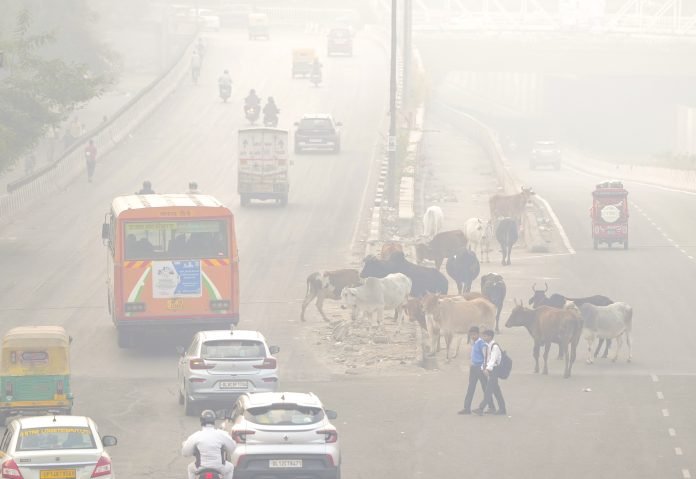
Delhi continues to grapple with a serious air quality crisis as the Air Quality Index (AQI) escalates to an alarming 360 on Saturday morning. According to the Central Pollution Control Board (CPCB), this level of pollution categorizes the air quality as “very poor.” The residents face increasing health risks, prompting authorities to issue multiple advisories.
The CPCB defines the AQI scale, where values between 0 and 50 indicate good air quality, while readings from 301 to 400 fall within the very poor range. Spatial analysis shows that localized pollution sources heavily influence air quality across various regions in the city.
On the same day, measures like driving restrictions and warnings against outdoor activities become common as citizens struggle to breathe. The minimum temperature recorded in Delhi was 11.8°C, as reported by the India Meteorological Department (IMD).
The IMD forecasted persistent fog throughout the day, predicting a maximum temperature around 28.2°C. These weather conditions, characterized by a relative humidity of 100 percent, contribute to the city’s worsening pollution levels and reduced visibility.
Experts underline the everyday hazards faced by residents, particularly vulnerable groups, including children and the elderly. Recommendations include staying indoors, using air purifiers, and wearing N95 masks for outdoor excursions.
The alarming AQI readings come amid ongoing debates about the effectiveness of pollution regulations and the urgency for concrete actions towards environmental sustainability in the capital.