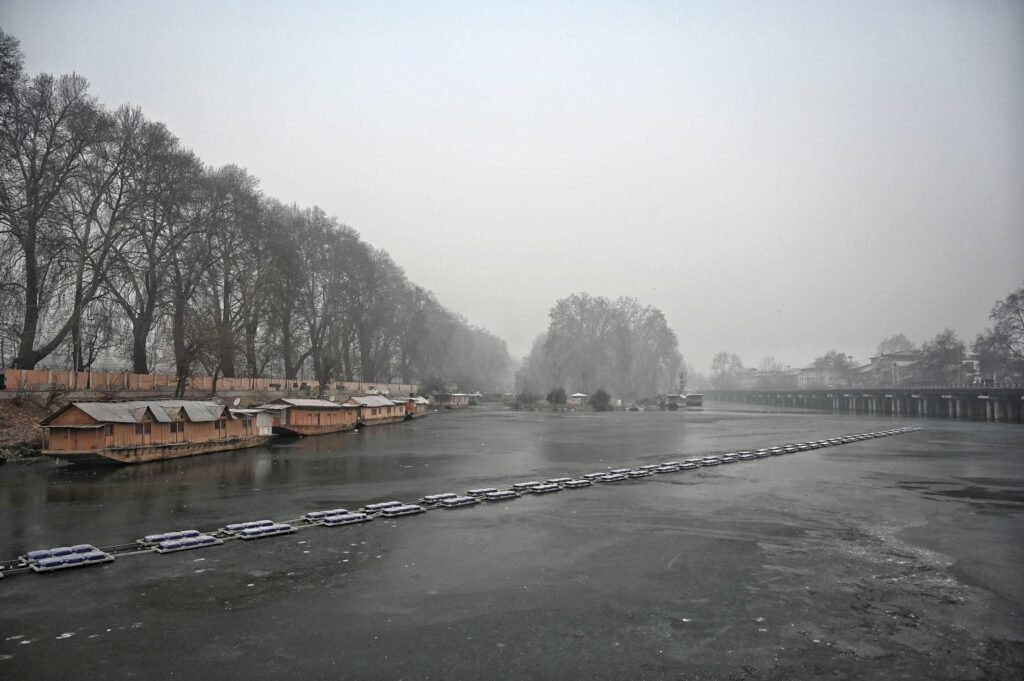
Srinagar, the summer capital of Jammu and Kashmir, experienced its coldest night this winter as temperatures dipped to an icy -2.1°C, according to the Meteorological (MeT) Department. This frigid weather notably affects daily life and signals the harsh winter ahead.
The cold wave swept across the region, with Pahalgam recording the lowest temperature of -3.8°C, making it the coldest spot in the Kashmir Valley. The drastic drop in temperature has implications for both residents and visitors.
Director of MeT, Dr. Mukhtar Ahmad, noted that the current cold spell will persist, as he stated, “There is no forecast of any wet spell for the next week.” He emphasized that the night temperatures are expected to remain steady until November 17, which contributes to the chill gripping the region.
Residents have started preparing for the frigid conditions. Warm clothing and heating arrangements are top priorities for families as the cold intensifies. Aside from the chilling temperatures, frost formation has begun in parts of Srinagar, further evidence of the approaching harsh winter.
Dr. Ahmad added a glimmer of hope for residents, suggesting, “After November 17, a slight improvement in night temperatures is possible, lasting for two to three days.” This forecast offers a brief respite to those enduring the biting cold.
As winter fully settles in Kashmir, the demand for traditional warm drinks and local delicacies increases. The iconic Kahwa, a warming green tea infused with spices and nuts, becomes a staple among locals seeking comfort against the cold.
These frigid temperatures not only impact daily life but also affect agriculture and livestock management in the region. Farmers anticipate potential damage to crops if temperatures fall further.
Srinagar continues to be a popular tourist destination, despite the cold weather. Many tourists come to experience the winter beauty of Kashmir. However, the current severe cold temperatures have led to reduced outdoor activities, reminding visitors to dress warmly.