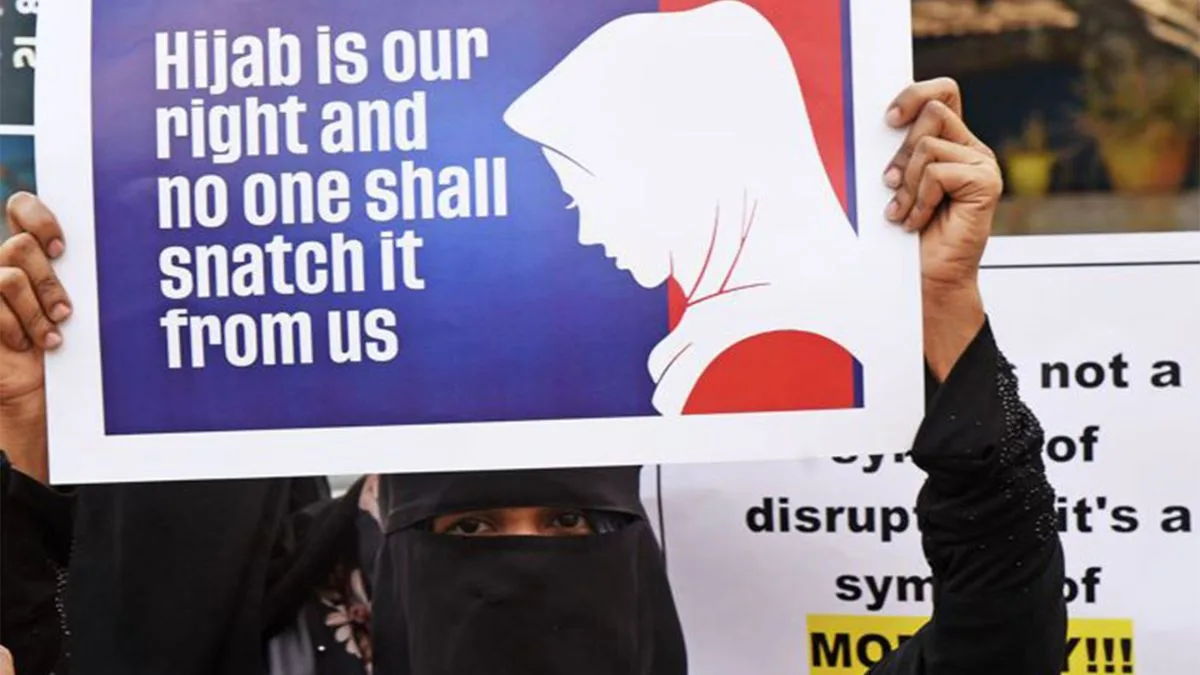
A student cannot compel a school to alter a common dress code on individual grounds if the rules are applied uniformly and without discrimination, the Allahabad High Court has held while rejecting a minor girl’s plea to wear a hijab in addition to her prescribed school uniform.
The court said the authority to determine a uniform primarily rests with the school when the dress code is bona fide and intended to preserve discipline and institutional identity. It also rejected the argument that the student’s earlier use of a headscarf gave her an enforceable right to continue doing so.
A Division Bench of Justice JJ Munir and Justice Indrajeet Shukla dismissed the petition filed by the student, who was seeking admission to Class 11 at the same Prayagraj school where she had completed Class 10.
The dispute arose when she sought admission to Class 11. The school management objected to the headscarf, saying it was not part of the prescribed dress code, and declined to admit her while she insisted on wearing it.
The student subsequently sent two complaints to the District Magistrate, who sought a report from the District Inspector of Schools.
During proceedings before the Assistant DIOS, the school principal said the co-educational institution had students from different communities and followed one dress code for everyone.
The school argued that making an exception for an individual student could affect its disciplinary framework.
Her counsel argued that the choice to wear a scarf was protected by the freedom of expression under Article 19(1)(a) of the Constitution and was connected to her dignity and bodily autonomy.
The petitioner also contended that the headscarf formed part of her religious practice and that stopping her from wearing it violated her fundamental rights under Articles 14 and 19(1)(a).
The State and the CBSE opposed the plea.
Their counsel submitted that the institution was a private unaided school and that prescribing a uniform was a matter of school policy intended to ensure uniformity among students.
The High Court did not accept the argument that the student’s previous use of a headscarf prevented the school from enforcing its dress code later.
It held that the absence of objections in earlier classes could not create a permanent or enforceable entitlement requiring the institution to relax its uniform rules.
The court said the earlier position could have resulted from lax enforcement, inaction, hesitation, or courtesy. That, it held, did not prevent the school from subsequently enforcing its policy strictly.
School uniforms, the Bench said, serve several purposes. These include discipline, equality among students, and institutional identity.
It also said a uniform applicable across faiths helps maintain a religion-neutral atmosphere because students are governed by the same rule irrespective of their religion.
The Bench also examined the student’s claim that wearing a scarf was part of her religious practice.
It found that she had relied on the fact that she had worn one since childhood but had not placed religious texts or other material before the court to establish that the practice was an “essential” part of her faith.
The court also took note of photographs placed on record and observed that other students from the same religious community were not wearing headscarves.
According to the Bench, requiring the petitioner to adhere to the prescribed uniform did not amount to curtailing her freedom of faith.
Allowing individual students to alter or add to a uniform according to personal preference, it held, would undermine the very purpose of prescribing one.
The petition was consequently dismissed.