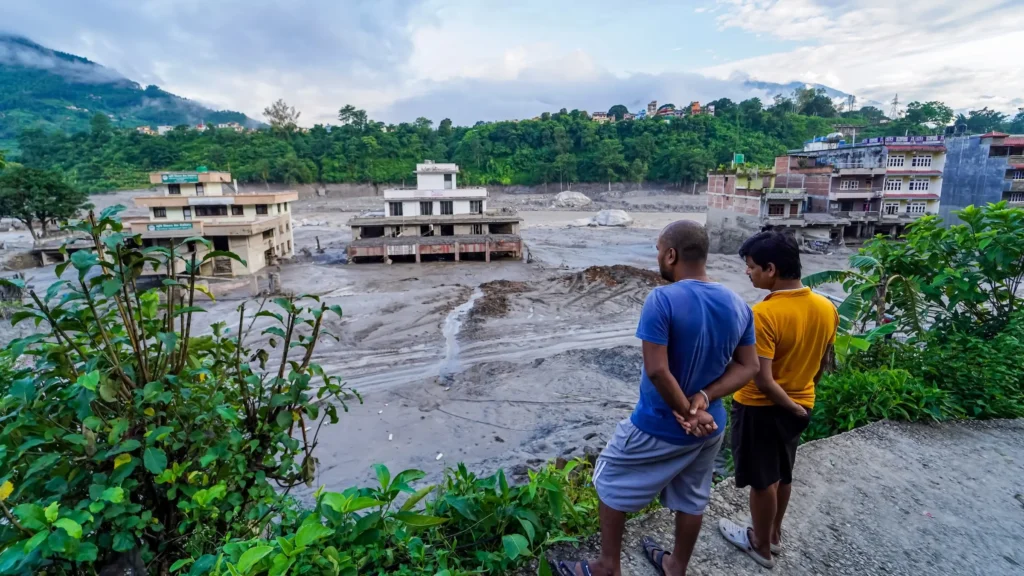
The devastating flash floods in Nepal have claimed at least 1,344 lives, with nearly 4,900 individuals unaccounted for since the disaster struck on August 26. Rescue teams continue to recover bodies while working under challenging conditions across affected districts.
The National Disaster Risk Reduction and Management Authority of Nepal reported that over 13,000 people have been evacuated from flood-affected regions. The floods were unleashed by an ice-rock avalanche near the Nepal-Tibet border, resulting in substantial water inflow into the Bhotekoshi River and its surrounding areas.
The floodwaters wreaked havoc, destroying homes, vehicles, roads, and even critically damaging hydropower projects throughout northern and central regions of Nepal. Reports indicate that amongst the bodies recovered, 758 were adults and 85 were children, with 501 bodies found in particularly bad conditions due to prolonged exposure and debris entanglement.
Authorities have temporarily buried 1,030 bodies following the standard procedures, such as DNA collection. Chitwan district has unfortunately become a focal point of the tragedy, recording around 360 recoveries alone. Other significant numbers have emerged from Rasuwa, Nuwakot, Dhading, Gorkha, Tanahun, and Nawalparasi districts.
The search extends to the missing, where more than 600 children are reportedly unaccounted for in Rasuwa and Nuwakot. The plight of these families raises urgent concerns among local officials and humanitarian organizations.
Rescue operations persist as authorities monitor water levels in various major rivers, including the Koshi, Narayani, Bagmati, and others. Joint rescue teams spearheaded by the Nepal Army have tirelessly worked for eleven days, particularly focusing on tunnels beneath hydropower projects where many workers remain trapped.
Two miraculous rescues took place on Friday when Kabir Maharjan, 45, a mechanical supervisor, and Sanjay Sah, 30, a foreman, were pulled alive from a tunnel at the Trishuli 3A hydropower site. This glimmer of hope amidst sorrow offers motivation to rescue teams.
Support from neighboring countries has amplified rescue operations. An Indian rescue team has worked alongside the Nepal Army, successfully creating a temporary track inside the Chilime tunnel, allowing heavier rescue equipment to access precarious sites.
This disaster has claimed lives on the Chinese side as well, with media reports stating at least 21 fatalities and over 500 people still missing in Tibet due to the floods.
As search efforts ramp up, communities bracing against the aftermath of the floods remain hopeful. Authorities continue to press on, monitoring rivers and pressing ahead with rescue operations despite the daunting challenges faced daily. The coming days prove critical for finding missing individuals and providing relief to those affected.