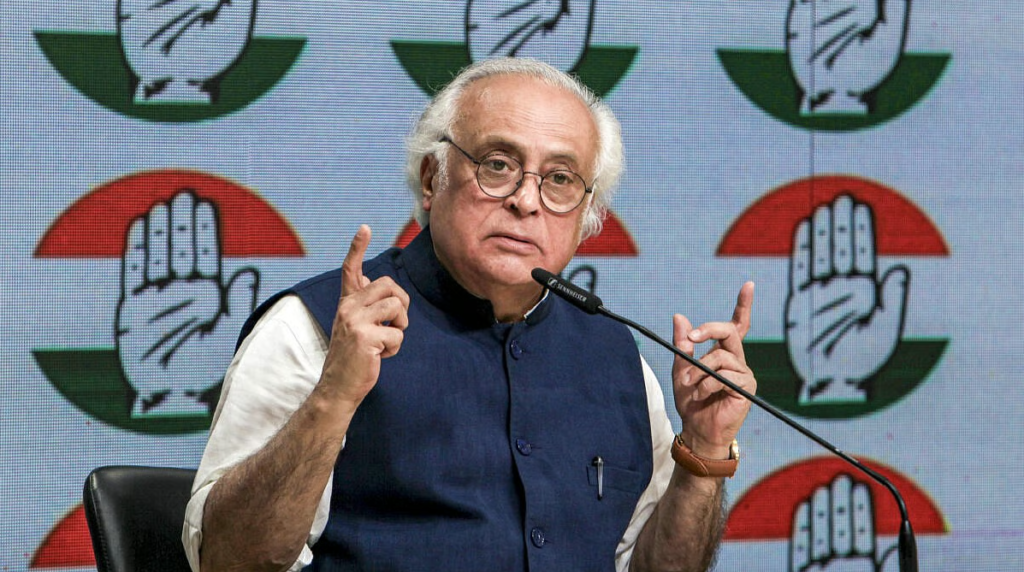
The Congress party strongly condemned any attempts to broaden the scope of post-facto environmental clearances on Thursday. This statement came after a critical Supreme Court ruling which emphasized the importance of prior environmental approvals, reinforcing the party’s commitment to uphold vital environmental laws in India.
The Supreme Court quashed a controversial 2021 office memorandum that permitted the granting of retrospective clearances for projects initiated without necessary environmental approvals. Congress leader Jairam Ramesh highlighted the significance of the court’s decision, stating that the ruling safeguards the framework of environmental impact assessments (EIA) and ensures adherence to the principles of sustainable development.
In May 2025, a two-judge bench of the Supreme Court established that prior environmental clearance is not just important, but mandatory. Ramesh argued that post-facto approval mechanisms, which emerged from the 2017 Notification and subsequent 2021 Memorandum, undermined the EIA process and rewarded illegal activities in the name of development.
Ramesh elaborated on the government’s push for a review of the judgment, claiming it threatened to disrupt numerous ongoing projects worth crores. Alarmingly, a three-judge bench entertained this review in an unusual manner, without clarity on why it warranted deviation from established procedures. Justice Ujjal Bhuyan notably dissented, asserting that ex-post facto environmental clearances do not exist within the current legal framework.
Ramesh described the recent Supreme Court ruling as a significant step forward for environmental jurisprudence. However, he pointed out that the court’s decision allows the government to define ‘exceptional circumstances’ that could lead to the establishment of a statutory mechanism for post-facto environmental clearances. This openness raised concerns among environmental advocates about potential abuse.
Highlighting ongoing struggles, Ramesh cited various instances of local communities pushing back against governmental and corporate disregard for environmental regulations. He remarked, “From Great Nicobar to the Ken-Betwa project, communities recognize the necessity of environmental laws and resist their erosion.”
His support for environmental protection has spanned 17 years, as he champions the cause for both marginalized communities and broader ecological health in India. Ramesh reiterated that the Congress party will remain vigilant against initiatives aimed at expanding post-facto environmental clearances.
A unanimous verdict from a bench comprising Chief Justice Surya Kant and Justices Joymalya Bagchi and Vipul M Pancholi confirmed that the ruling will apply prospectively, offering a safeguard to projects that previously received retrospective environmental clearances from punitive actions.
The Supreme Court also acknowledged that the central government possesses substantial authority under Section 3 of the Environment (Protection) Act, 1986, allowing it to formulate amnesty schemes for specific categories of non-compliant projects. This provision pertains to significant projects such as the AIIMS Medical College and Hospital building in Odisha and major infrastructure initiatives across various states.
The bench, in its ruling, declared the 2021 Office Memorandum invalid, affirming it with prospective effectiveness by leveraging their powers under Article 142 of the Constitution. The judges cited the legal uncertainty and overarching public interest involved with ongoing projects, emphasizing the need for a balanced approach regarding environmental regulations.
Moreover, the court acknowledged the inherent conflict between the rights to a pollution-free environment and the aspirations of the one-sixth of the world’s population for development. To mitigate this, the judges called for a reevaluation of how the government addresses environmental concerns throughout development, advocating for a perspective that prioritizes eco-centric fairness.
In conclusion, the Congress party’s firm stance against the extension of post-facto environmental clearances resonates with widespread public demand for stronger environmental safeguards. As legal and civic battles unfold, the commitment to uphold environmental laws remains crucial for sustainable development in India.