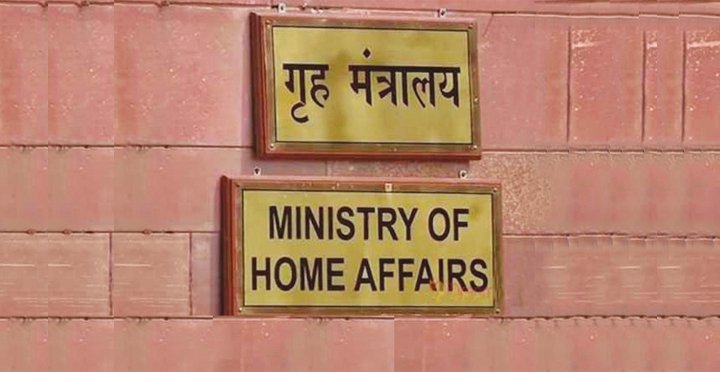
India has brought back 274 fugitives from 36 countries between 2019 and 2026, including individuals accused of terrorism, financial crimes, and grave offenses such as murder and sexual assault, the Ministry of Home Affairs (MHA) reported on Tuesday.
The significant figure highlights India’s enhanced focus on tracking down and repatriating criminals who have fled the country. The MHA also disclosed that assets worth a staggering Rs 17,874 crore, linked to these fugitives, have been attached through stringent enforcement of the Prevention of Money Laundering Act (PMLA).
Furthermore, the ministry indicated that Rs 18,762 crore has been recovered from Fugitive Economic Offenders who absconded, underlining the government’s increasing efficiency in combating financial crimes. The report noted that a total of 40 Red Corner Notices were issued in 2022, with numbers skyrocketing to 182 in 2026 alone, reflecting India’s commitment to capturing fugitives who evade justice.
Among the 274 fugitives brought back this year as of July, the MHA confirmed that 45 were apprehended, following a peak of 70 in 2025. Statistically, 43 were extradited in 2024, 37 in 2023, and 40 in 2022, demonstrating a consistent effort to bring these criminals to justice.
The MHA’s data indicates that most of the fugitives face serious charges, with 62 wanted for murder and violent crimes, 53 for sexual offenses, and 45 connected to various other serious criminal activities. Authorities have reported the involvement of these fugitives in organized crime, human trafficking, and narcotics, amongst numerous other grave charges.
“Taking a decisive stance against fugitive criminals, under the leadership of Prime Minister Narendra Modi and Union Home Minister Amit Shah, India has successfully repatriated 274 criminals from 36 countries,” stated the MHA. The introduction of the Fugitive Economic Offenders Act in 2018 has bolstered efforts to pursue those who evade legal consequences.
The report also emphasized the need for a robust extradition framework. Prior to 2014, India’s processes were outdated, with treaties in place for only 37 nations. The inefficiency of the system resulted in only an average of four extraditions per year from 2004 to 2013, with a backlog of 110 requests.
Legal complications such as the principles of double jeopardy and dual criminality often hindered extradition requests, compelling the MHA to strengthen inter-departmental coordination and real-time communication with global police agencies.
The government’s current strategy actively prioritizes the return of fugitives as a matter of national interest, reflecting wider implications for sovereignty, law and order, and economic stability in India. Union Home Minister Amit Shah views this initiative as linked to the nation’s broader security and economic principles.
“The Modi government has made tackling fugitive criminals a national priority,” the report underscored. This commitment is reflected in intensified investigations and the establishment of the Central Bureau of Investigation’s (CBI) Special Global Operations Centre, enhancing the ability to trace and apprehend fugitives using advanced technology.
Operational efforts such as Operation Trishul aim to geo-locate criminals who have absconded to foreign lands. With cutting-edge satellite and digital tools, Indian agencies can track culprits who attempt to obscure their identities. Through technological innovation, the extradition process has seen a transformation, employing practices such as video conferencing for expedited court proceedings.
A notable success is the extradition of Tahawwur Hussain Rana from the United States, highlighting India’s ongoing commitment to pursuing fugitives involved in terrorism, particularly those affecting the peace in Jammu and Kashmir.
The MHA asserts that the results achieved in repatriating fugitives rely on a comprehensive approach, where coordinated efforts among various Indian intelligence and investigation agencies are critical. The establishment of a Standing Focus Group under the Multi Agency Centre (MAC) illustrates a dedicated effort towards improving the management of fugitive cases, ensuring thorough follow-ups with international partners.
Overall, the MHA views fugitives abroad as not merely unresolved cases but as active threats requiring sustained and proactive action. This unwavering commitment to justice signifies a transformative period in India’s extradition proceedings.