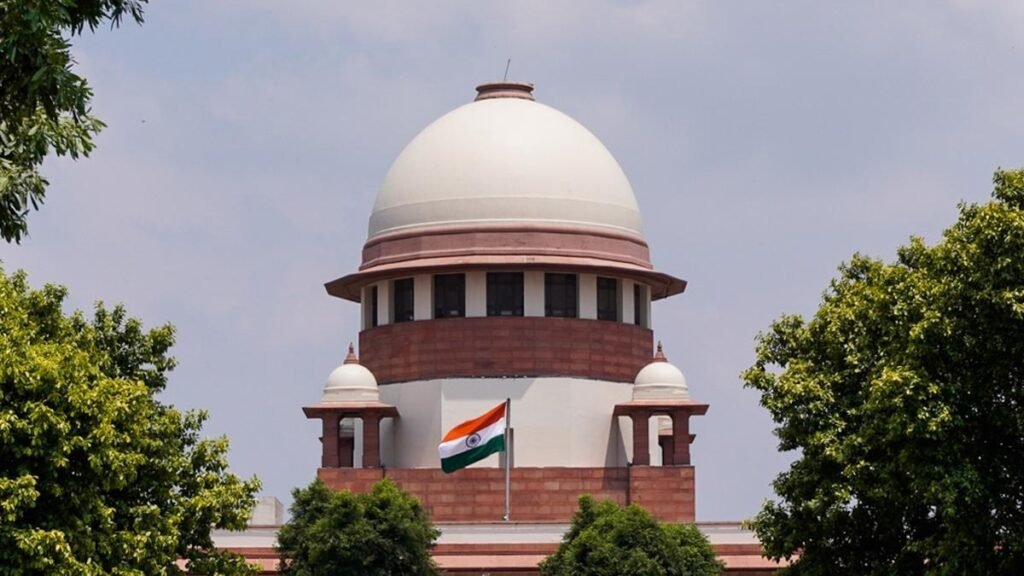
The Supreme Court of India announced on Tuesday its decision to form a high-powered committee to scrutinize allegations of police excesses against student protesters during the National Eligibility cum Entrance Test (NEET) protests held in Delhi.
A bench comprising Chief Justice Surya Kant, Justice Joymalya Bagchi, and Justice V Mohana revealed that the formal order to establish the committee would be released on Wednesday. They plan to incorporate recommendations from various stakeholders regarding additional members for the panel.
This committee will include retired judges, a former Director General of Police (DGP), an ex-Director of the Central Bureau of Investigation (CBI), and other experts. It aims to ensure a thorough investigation into the excessive use of force by police during the events.
The Supreme Court will also instruct the authorities to release any available video footage and closed-circuit television (CCTV) recordings capturing the incidents from the July 20 protest, which turned violent as participants marched toward Parliament.
Furthermore, the committee will specifically investigate the complaints from female protesters, who reportedly experienced targeted violence during the protests, shedding light on issues of gender discrimination amidst civil unrest.
Solicitor General Tushar Mehta has been tasked with providing details of the First Information Reports (FIRs) against the student protesters. The court indicated its inclination to use its plenary powers under Article 142 of the Constitution, potentially quashing these FIRs to prevent undue legal consequences for students.
The bench emphasized, “It is the life of students that is at stake. We must take this into account. Their future depends on these circumstances, and they possess the right to protest under Article 19 of the Constitution.”
In response to the unrest, Mehta stated that police identified over 2,800 individuals with previous criminal records who had exacerbated the situation during the July 20 march and claimed those individuals sparked the violence.
On August 3, the Supreme Court clarified that the term “criminal antecedents” in its previous orders referred solely to those involved in serious crimes. It encouraged states to close or withdraw FIRs against remaining students in accordance with legal frameworks.
This clarification emerged after the central government expressed its willingness to drop legal actions against students linked to the NEET protests, as long as they do not have serious criminal backgrounds.
The apex court also highlighted that police brutality or the use of a ‘lathi charge’ cannot be excused simply due to an ongoing agitation. The court firmly reiterated that the right to peaceful protest is “absolutely guaranteed” in India.
The protests on July 20 organized by the Cockroach Janta Party saw significant clashes between protesters and law enforcement, with police employing batons and tear gas canisters to disperse the demonstrators.